Illustration of the lab's research: a phylogeny of fruit-fly species with gene-expression curves, single-cell clusters of diverse cell types, a space of cell states in which photoreceptors change state, and a cross-section of the retina with rods and cones.

Pal Lab

Led by Soumitra Pal | Computational Biology of Cell Identity and Change

We use computation to understand how cells acquire identity, maintain it, and change across development, evolution, aging, and disease. Our work spans gene-expression evolution, single-cell atlases, and photoreceptor biology, combining scalable algorithms, stochastic models, machine learning, and physics-informed approaches to build biologically grounded models of cell state.

See our research

Research

This work was carried out by Soumitra Pal working with Anand Swaroop (National Eye Institute), Teresa Przytycka (NCBI), Sanguthevar Rajasekaran (University of Connecticut), Srinivas Aluru and Abhiram Ranade (IIT Bombay), and T. S. Jayram (IBM Research India).

Evolution of gene expression

How does gene expression evolve: neutrally, under constraint, or adaptively? EvoGeneX models expression across species with Ornstein–Uhlenbeck processes and uncovered tissue- and sex-specific patterns of expression evolution in the Drosophila genus. PINNOU extends this with physics-informed neural networks. These methods are now being applied to retinal transcriptomes from more than 100 species, including adaptive expression in nocturnal birds.

Photoreceptor evolution and development

Rod photoreceptors enable dim-light vision. This work traces how the MAF and OTX transcription factor families, key to photoreceptor specification, evolved across Metazoa through two rounds of whole-genome duplication, and examines rod development in birds and mammals and transcriptional changes in the aging retina.

Single-cell atlases and sex differences

As part of the Fly Cell Atlas, Soumitra analyzed sex differences across adult fly tissues, identifying sex-biased cell counts and gene expression. Follow-up work showed that cell-type-specific allometry controls sex differences in organ size, that X-chromosome dosage compensation varies by cell type, and how Transformer and sex-chromosome karyotype pathways regulate gonad development.

Algorithms for sequence analysis

Efficient sequential and parallel algorithms for core problems in genomic sequence analysis: motif discovery under edit-distance and quorum constraints, k-mer counting, detecting error-free reads, and metagenomic classification.

Algorithms, optimization and parallel computing

From doctoral work on scheduling light-trails in optical networks and on graph colouring, through inferring power-grid connectivity from smart-meter data (IBM Research) and recovering sparse integer solutions, to parallel SVD and asynchronous distributed optimization for machine learning.

AI & Machine Learning

  • Foundation models for retinal transcriptomics, trained and evaluated in the cloud
  • Physics-informed neural networks for phylogenetic inference
  • Stochastic process models of expression evolution and adaptation
  • Scalable optimization and parallel machine learning

Software

EvoGeneX

R package that tests whether gene expression evolves neutrally, under constraint, or adaptively, from RNA-seq across species and replicates.

PINNOU

Physics-informed neural networks for phylogenetic Ornstein–Uhlenbeck inference.

JUDI

Python workflow manager for running bioinformatics pipelines across many parameter settings.

Co-SELECT

Analysis of HT-SELEX data that reveals the contribution of DNA shape to transcription-factor binding.

EMS2

Fast algorithms for finding edit-distance-based motifs in a set of sequences.

perfectread

Detects error-free reads in high-throughput sequencing data with substitution errors.

Hybrid-DCA

Double-asynchronous parallel and distributed stochastic dual coordinate ascent for machine learning.

News & Publications

Latest news

All news

Selected publications

  • Soumitra Pal†*, Noor D. White Carreiro†, Zachary Batz, Leo Goubet-McCall, Caroline Judy, Anand Swaroop*. Evolution of MAF and OTX families during the emergence and stabilization of rod photoreceptors across Metazoans. Research Square, 2026. Under review. doi:10.21203/rs.3.rs-10144266/v1
  • Soumitra Pal, Jerome Avellaneda, Celena M. Cherian, Puja Biswas, Georg Vogler, Elizabeth J. Rideout, Frank Schnorrer, Teresa M. Przytycka*, Brian Oliver. Cell type specific allometry controls sex-differences in Drosophila organ size. Genetics 233(2): iyag091, 2026. doi:10.1093/genetics/iyag091 Selected as a GENETICS Featured Article.
  • Sharvani Mahadevaraju†*, Soumitra Pal†*, Pradeep Bhaskar, Brennan McDonald, Leif Benner, Luca Denti, Davide Cozzi, Paola Bonizzoni, Teresa M. Przytycka, Brian Oliver*. Diverse somatic Transformer and sex chromosome karyotype pathways regulate gene expression in Drosophila gonad development. eLife, 2024. doi:10.7554/eLife.101641
  • Soumitra Pal, Brian Oliver, Teresa M. Przytycka. Stochastic Modeling of Gene Expression Evolution Uncovers Tissue- and Sex-Specific Properties of Expression Evolution in the Drosophila Genus. Journal of Computational Biology 30: 21–40, 2023. doi:10.1089/cmb.2022.0121 Introduces EvoGeneX.
  • Soumitra Pal, Jan Hoinka, Teresa M. Przytycka. Co-SELECT reveals sequence non-specific contribution of DNA shape to transcription factor binding in vitro. Nucleic Acids Research 47(13): 6632–6641, 2019. doi:10.1093/nar/gkz540

† co-first author; * corresponding author

All publications

Mentoring & Outreach

Soumitra judges mentoring by the independence, skills and scientific products that trainees develop. Trainees so far have ranged from high-school students to graduate interns, and several are co-authors on the resulting manuscripts.

Programs

  • Graduate Summer Internship Program, co-mentor (2026)
  • IIEST Shibpur Alumni Network Program, co-mentor (2025–26)
  • Postbaccalaureate fellowship mentor (2024–26)
  • High School Summer Internship Program, mentor (2023)
  • Postbaccalaureate IRTA program, mentor (2020)
  • Community College Summer Enrichment Program, mentor (2018); Summer Research Mentorship Award

Judging

  • Fellows Award for Research Excellence (FARE), judge (2023, 2026)
  • Graduate Student Research Symposium, judge (2024)
  • Postbaccalaureate Poster Presentation, judge (2020)

Teaching

  • Teaching assistant, IIT Bombay (2005–09): Computer Programming and Utilization; Design and Analysis of Algorithms; Linear Optimization; Foundations of Parallel Computing
  • Scientists Teaching Science, nine-week pedagogy course (2018)

Trainees mentored

Listed with each trainee's permission.

Team

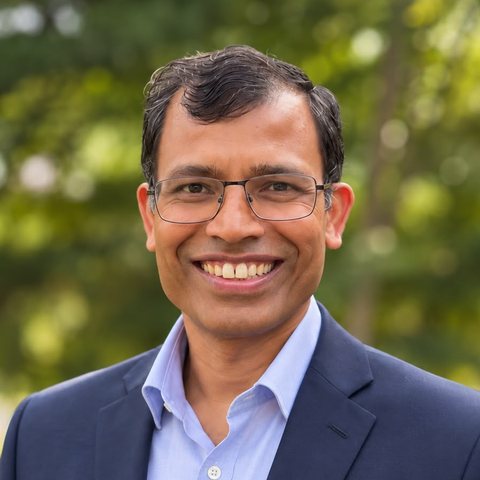
Portrait of Soumitra Pal

Soumitra Pal

Staff Scientist

Neurobiology, Neurodegeneration & Repair Laboratory
National Eye Institute, National Institutes of Health

Soumitra Pal is a computational biologist and computer scientist interested in how cellular states are established, maintained, and changed. He trained in algorithms and high-performance computing, earning a PhD in computer science at IIT Bombay and working at Texas Instruments, IBM Research, and the University of Connecticut, before moving into computational genomics at NCBI and then vision research with Anand Swaroop at the National Eye Institute.

His work has spanned single-cell atlases, gene regulation, development, aging, and evolution. He has studied how cell types differ between sexes and across species, how gene-expression programs adapt during evolution, and how photoreceptor identity emerges and is maintained. Throughout, he has built computational methods in close partnership with experimentalists, drawing on mouse retina, single-cell and bulk transcriptomics, and comparative genomics across more than a hundred species. These threads point toward one question: how can we move from describing cellular states to understanding how they change?

He has developed tools including EvoGeneX, PINNOU, Co-SELECT, and JUDI, contributed to collaborative efforts such as the Fly Cell Atlas, and mentored trainees from high school through graduate school. Across all of it he follows one principle: useful computational biology should make predictions that biology can prove wrong.

Contact

Soumitra Pal

soumitra.pal@nih.gov